
A Tale Of Two Asynclitic Births
Apr 21, 2026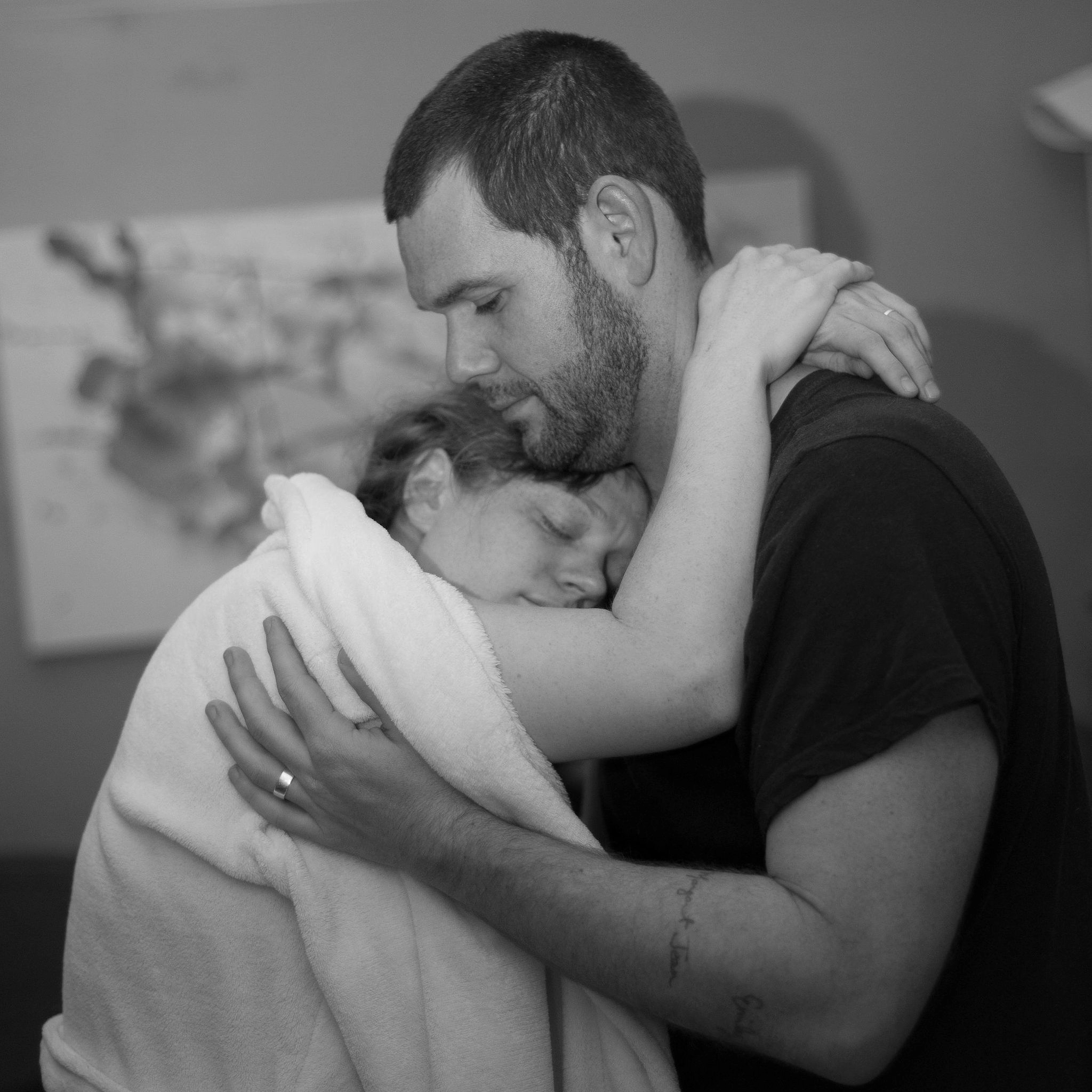
The first home birth I attended was a profound teaching in learning to prioritize what a birth is asking for. This was about 10 years ago, while I was working night shift at the hospital. I had been invited to a friend’s birth as a doula and midwife’s assistant. It was her second baby, and since those tend to come quick, we all arrived promptly after she called. I came straight from the hospital after working all night, attempted a brief (but unsuccessful) nap, and then was up supporting all day, into the night, and until the next afternoon when the baby was finally born.
The labor did feel like it had slowed at a certain point, and us support people began to encourage her to move. She didn’t want to—it hurt to move. We were thinking the baby was asynclitic, so we kept encouraging, and she kept declining. Finally she said something like, “I feel like I’m disappointing you guys.” And when she said that, of course we felt like, oh gosh, this isn’t about us! We were just trying to be helpful! But seemed like we weren’t being so helpful, so we backed off. She got some time alone snuggled up with her partner and you know what? After about it hour, they came out and it was like a completely different labor. She had dropped into the parasympathetic. And from that place, she could move, she could bring her baby down.
That birth was an important lesson for me. We consider the biomechanics of birth, of course, but we never forget the nervous system.
And so…
When I was in my midwifery training, I attended a birth of a mother that taught me the power of sitting quietly. Her first birth had been a traumatic miscarriage while on her honeymoon, and her second birth had been a highly medicalized twin birth. She was now pregnant for the third time, and very nervous about how it was all going to go. On top of that, she had recently lost her father, with whom she had a very challenging relationship. She was navigating a lot of complicated grief, knowing that she was having a boy and that she would be naming him after her father (as was custom in her culture). When she arrived at the birth center, her labor was active. She ended up in the tub, working hard with her contractions. She was in transition, but at a certain point I had that sense that it was taking a bit longer than usual. She had a one sided hip pain and between that and her labor pattern, my sense was that the baby was asynclitic.
But the birth didn’t feel stuck. She was crying and it felt like she was moving her grief. I could’ve made suggestions to resolve the asynclitism (and in the past I definitely would have!). But everything felt like it was unfolding exactly as it should be. There was movement in the birth.
So I sat in the corner quietly, moving into her space intermittently to take heart tones. When she cried all the tears she needed to cry, she pushed her baby out. It was a girl!
The question in any birth is…what is this birth asking for? Sometimes it is truly asking for an intervention. Sometimes it is asking for hands on support. But sometimes it is asking us to sit quietly in the corner. The art of birthwork is to know the difference. And for many of us, there is an unlearning of what we would typically do. When we become skilled at knowing when to stand back and when to step in, we achieve best outcomes.
Stay connected with news and updates!
Join our mailing list to receive the latest news and updates from our team.
Don't worry, your information will not be shared.
We hate SPAM. We will never sell your information, for any reason.